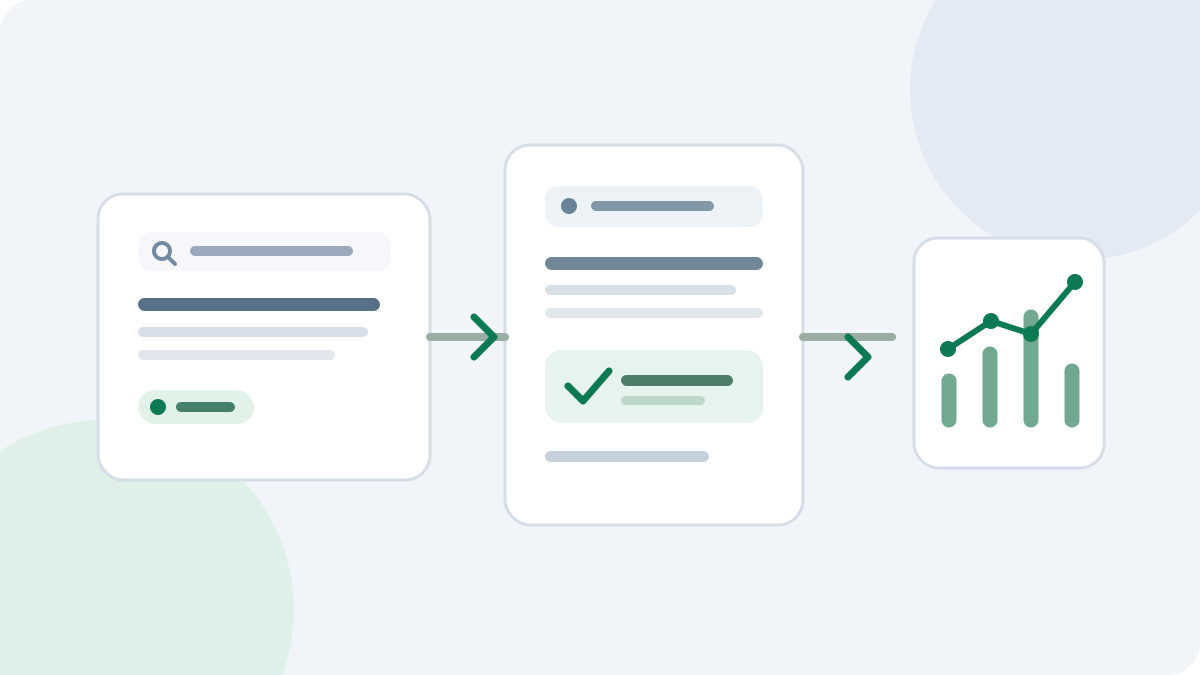
AI answers are not a fixed search-results page. To learn whether your site is being cited, use the platform's own report when one exists and keep manual checks consistent. A small log can reveal patterns in your sample, but it cannot estimate every answer a platform produces.
Use three separate signals: platform-reported citations or impressions, referral visits from AI services, and your own repeated prompt checks. Each describes a different part of visibility.
Decide what you want to measure
- Linked citation: the answer includes a clickable source URL on the site you are monitoring.
- Unlinked mention: the answer names the site or brand but does not link to it.
- Platform report: a first-party report shows citations or impressions according to that platform's definition.
- Referral visit: analytics records a visit from an AI platform. This measures visits, not all answers where a site appeared.
Keep these labels separate. A citation count, a brand mention, a referral session and a Google Search impression are not interchangeable measures.
What first-party reports can show
Google Search Console
Google's Generative AI performance report shows impressions from AI Overviews and AI Mode and can group results by pages, countries, dates and devices. Google notes that the report may not appear when a site has not received enough impressions in those features. It is not a prompt-by-prompt answer log.
Bing Webmaster Tools
Bing's AI Performance report includes total citations, cited pages, trends and grounding queries. Bing describes its grounding-query data as a sample of overall citation activity. Treat the terms shown there as useful examples of retrieval context, not a complete list of every prompt.
Use each platform's own definitions when you compare dates or pages. Do not combine Google's impressions with Bing citations into one total.
Set up a repeatable manual sample
- Choose a short prompt set. Start with questions a customer might ask before choosing a product or service. Include informational, comparison and task-focused prompts; do not use only questions that name your brand.
- Keep the exact wording. Save the prompt text so you can run it again later. A different wording can produce a different answer.
- Record the conditions. Note the platform, date, language and location. Also record whether you were signed in and any visible search or browsing setting that could affect the result.
- Classify what you saw. Mark a linked citation, an unlinked mention, not found in that answer, or unable to check. If linked, save the exact cited URL. Keep the answer or share URL if the platform provides one.
- Repeat at a reasonable interval. Use the same prompt set and conditions when possible. If you change prompts or settings, make that clear in the log rather than comparing the rows as if they were identical.
The SEOWins AI Citation Tracker stores those manual observations in your browser, supports platform and domain filters, and exports a CSV backup. It does not query AI platforms automatically.
How to interpret a citation rate
If you record 20 checks and 4 include a link, you can say that 4 of your 20 recorded checks included a link. You cannot conclude that the platform cites your site in 20% of all relevant answers. Your prompt selection, account, location, product version and timing all affect the sample.
When reviewing a change, compare the same prompts, platform and conditions. Keep unavailable answers separate from answers where the site was not found. A missing result is evidence about that one check, not proof that an engine never uses the page.
Turn an observation into a useful page action
- Open the cited or intended page and confirm it directly supports the answer a reader needs.
- Check that important facts are current and that original evidence or references are available.
- Review crawl access, index eligibility, page titles, headings, internal links and visible page content.
- If a report surfaces a relevant phrase with no obvious page owner, decide whether an existing page can answer it before creating another URL.
- Record the change and check the next report or sample after the platform has had time to revisit the page.
SEOWins' AI Search Insights reads exported Search Console and Bing reports separately. You can send a topic group to the Content Brief to organize related phrases and candidate pages before revising a page.
What not to conclude
- A one-time test is not a stable AI ranking.
- A report with no rows does not prove there were no answers; the platform may have limited coverage or too little data.
- A citation does not prove that a page caused a referral or conversion.
- A change in citations does not prove that one edit caused the change.
- No audit score can guarantee that a system will cite your content.